
Oakland Neighbors: Sources Around One Block
A block lookup works best as a source map. The Assessor Parcel Viewer supplies the land units and APNs around a known address. Assessment and tax relationships can add an owner or taxpayer for a selected parcel. Oakland GIS adds ZIP, zoning, district, and planning context. Historical directories, census schedules, permits, voter channels, and Neighborhood Council materials answer different questions and carry different access limits.
| Source | What It Shows About a Block | Access |
|---|---|---|
| Alameda Assessor Parcel Viewer | Adjacent parcel geometry, APNs, situs, and map attributes | Free visual browse; not a legal survey |
| Assessor or tax relationship | Owner or taxpayer relationship for a selected parcel | One parcel at a time; current records |
| Oakland GIS MapServer | ZIP, parcels, zoning, districts, and planning context | Online map or service layers |
| Reverse directory | Listed occupants or phones up and down a historical street | Selected Oakland History Center years |
| Census schedule | Historical households in enumeration sequence | Public federal schedules through 1950 |
| Oakland permit search | Construction and code activity around an address | General address search after 1987 |
| Voter data | Registered voters only through an authorized file or historical register | Purpose restricted for current data; historical route in person |
| Neighborhood Councils | Public leaders, meetings, and community boundary context | City page and public meetings |
The table shows why a neighbors search cannot promise a full household list. Ownership is not occupancy. A reverse directory is historical, while a permit identifies an applicant or contractor rather than everyone at the address. Public civic contacts are not membership rolls. Use the source that matches the fact being tested and record the date of access.
Walk Parcel by Parcel From an Oakland Address
The adjacent-parcel method begins with one known address, not a guessed radius. The county viewer's documented use is map browsing. It does not advertise a public resident-radius report. A select or buffer feature visible in a live interface remains parcel output, not a household report.
- Enter the target street address or APN in the Alameda Assessor Parcel Viewer and normalize the situs label.
- Zoom until parcel polygons and street numbers are legible, then select the target parcel and note its APN and map reference.
- Click each touching or nearby parcel separately. Pan along both sides of the street and include corner, rear, condominium, and public-right-of-way shapes.
- Record owner or taxpayer fields only where the assessment view makes them public, keeping mailing and situs addresses separate.
- Use the Oakland GIS layers for ZIP, zoning, or district context, then move to deeds, permits, or historical directories for the question at hand.
When the question expands from the immediate block to a named street and its full address chain, use the Oakland street directory for the broader walkthrough.
Consecutive Numbers Miss Real Parcel Edges
Street numbers are a poor proxy for legal adjacency. Intersections interrupt a sequence. Rear lots can face a different street. A condominium can sit on several parcels, and a public right of way can split the shapes that seem to touch. Oakland's map layers help show the land pattern, but only a parcel selection can expose the APN and map reference for a chosen polygon.
Do not infer a whole block from one owner name. A deed or assessment relationship belongs to a parcel, while a nearby address can have a separate legal description, mailing address, or ownership structure. If a parcel was divided or combined, former APNs may matter. A boundary map is orientation, not a survey, and an owner record is not a list of every person who uses the space.
Oakland Ownership Is Not a Neighbor Roll
The Assessor can connect an owner or taxpayer to a parcel, but it does not identify everyone who lives at an address. A matching mailing and situs address may support an owner-occupancy clue. A homeowner exemption can reinforce that clue. Neither proves every resident, household member, or visitor. A different mailing address can reflect a trust, manager, preferred destination, or owner who does not use the parcel as a home.
People who do not own the land may not appear in property data at all. Utility accounts, delivery records, DMV information, and private association rosters are not substitutes for an official public block directory. A careful Oakland neighbors search says what the parcel source proves and leaves the rest unclaimed.
Alameda Voter Tools Do Not Browse Neighbors
Alameda My Voter Profile is an identity check for the voter who uses it. The form asks for first name, last name, date of birth, and identity fields that may include driver license, state ID, or Social Security digits. County or ZIP can narrow the authentication. A result may show registration status, districts, precinct, polling or vote-center information, ballot status, and election materials, but it does not reveal ballot choices or create a public street list.
The official Alameda My Voter Profile illustrates the difference between self-lookup and a block browser.
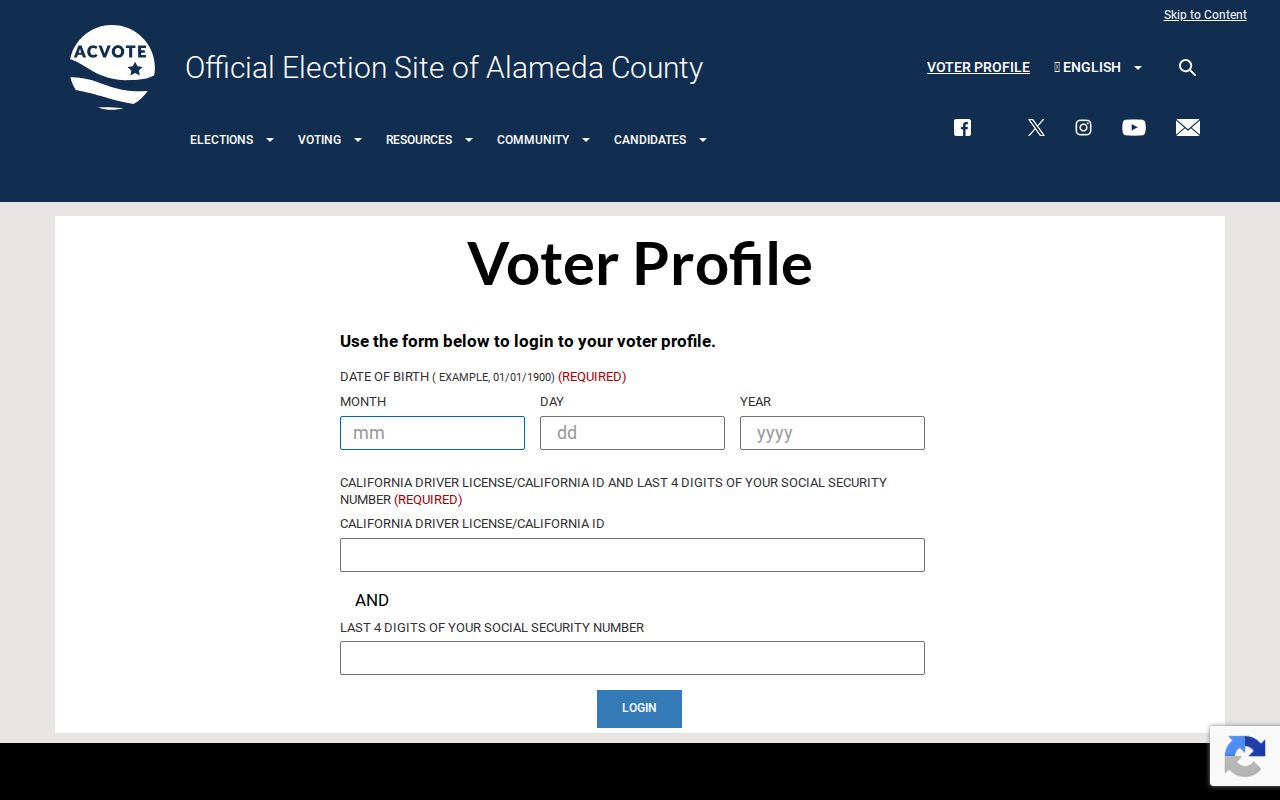
The self-service design returns one authenticated profile, not a list of Oakland neighbors. Historical Alameda voter registers from 1867 through 1944 are a separate Oakland History Center route for in-person work.
California Voter Status Is a Self Check
California's registration-status tool links a voter to the appropriate county profile. It is useful for confirming one's own status, but a no-match does not prove that a person never lived near an Oakland address. List maintenance, a changed status, a protected record, or a name variant can explain the result. Public voter details remain confidential outside authorized access under Elections Code section 2194 and Government Code section 7924.000.
The official California voter-status lookup shows the self-service route that should not be repurposed as an open neighbor search.
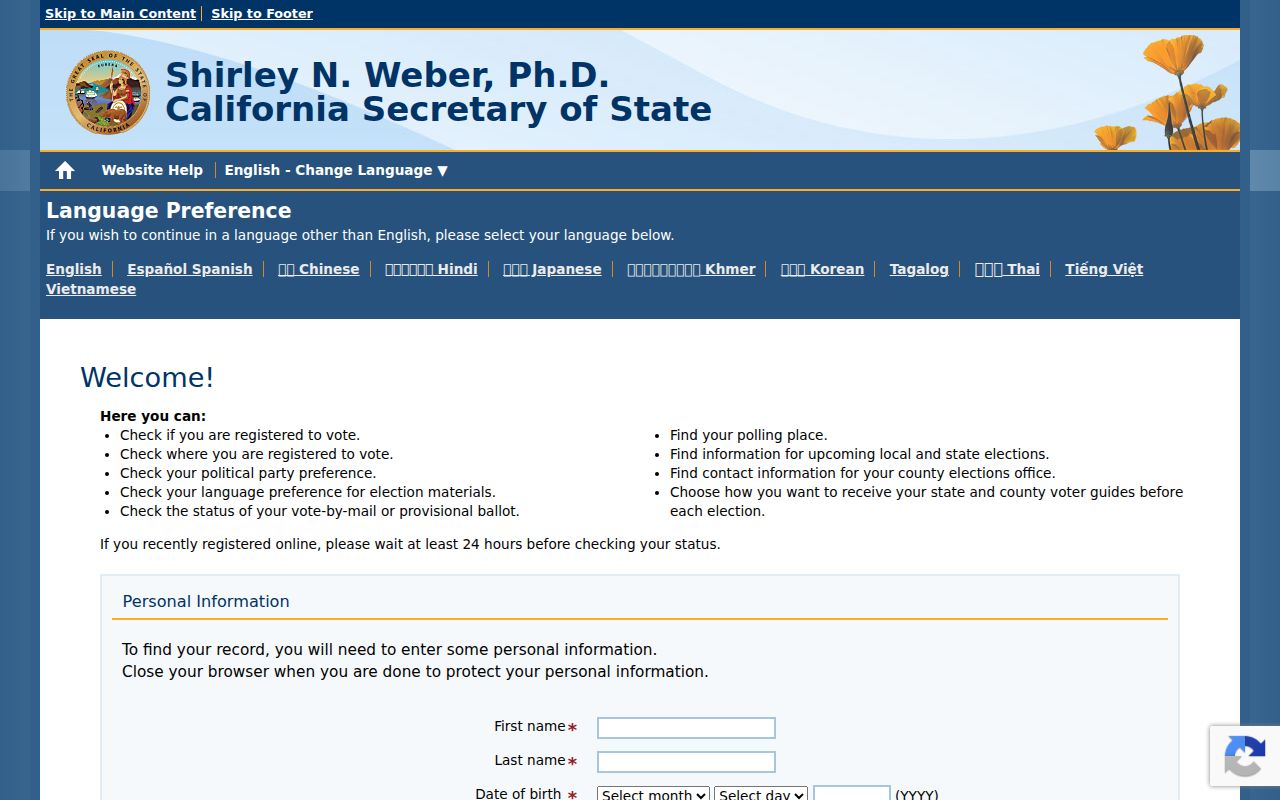
Home address, telephone, email, precinct, and prior registration are confidential outside the authorized channel. Driver or ID numbers, Social Security or unique identifiers, and signatures remain protected in ordinary voter files.
Authorized Voter Files Have Narrow Uses
An approved voter file can technically be filtered by residence or ZIP after delivery, but that channel is not a general Oakland neighbor lookup. California permits access for election, scholarly, journalistic, political, or governmental purposes. The application asks for the applicant and organization, contact details, permitted purpose, client or authorizing person, security and storage plan, authorized users, requested files, and a certification under penalty of perjury.
The statewide file fee is $100. A specific-voter request is $30 each, with a maximum of $100 and ten records. Released products can include active or inactive registration files, optional participation history, and an optional district file. Commercial use is prohibited, and protected identifiers or signatures are not released.
The official California voter-file request guidance and its voter-file application show why address filtering must stay inside the approved purpose.
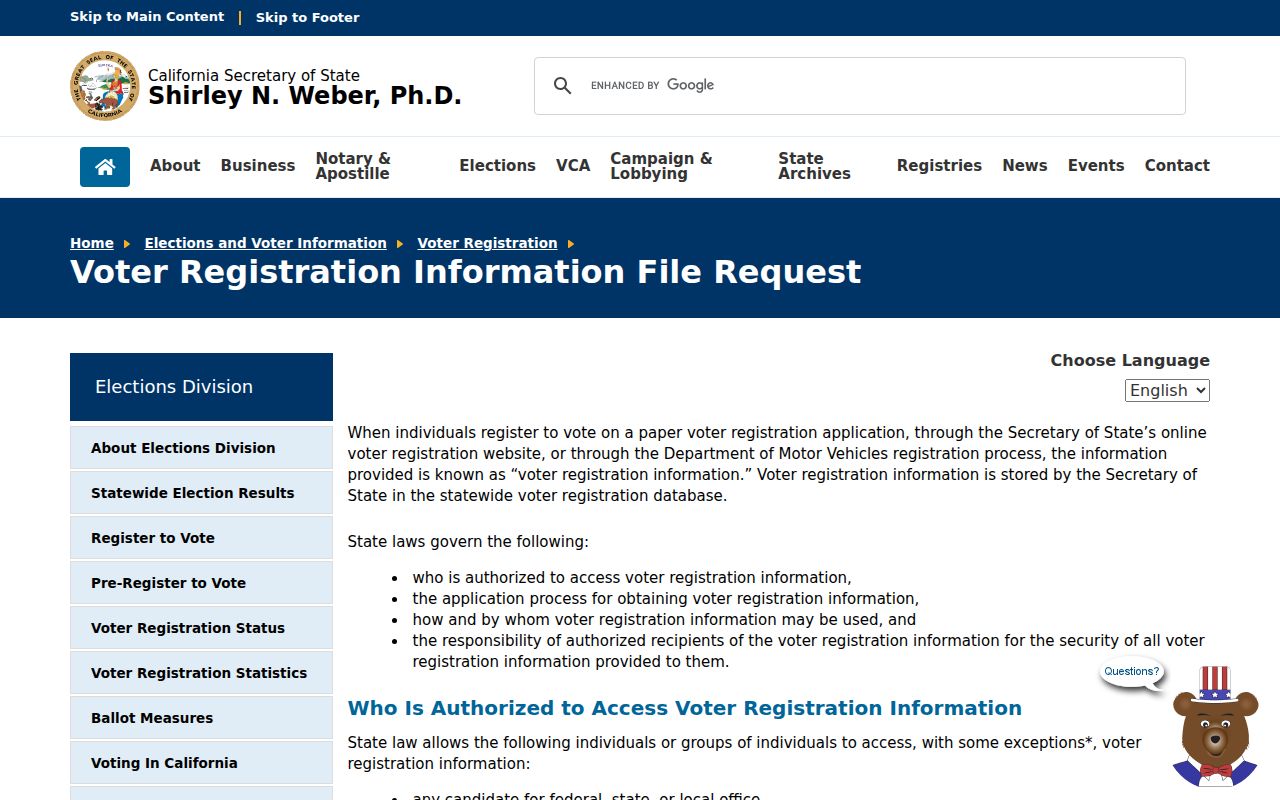
Even an authorized file contains registered-voter data, not a complete list of the people connected to every Oakland parcel.
Oakland's Historical Block Numbers Matter
Historical neighbors can be easier to trace than current ones when the source is built for addresses. Oakland History Center reverse directories appear for 1936, 1953, 1961, 1964 through 1974, and 1995, with digitized reverse volumes linked for 1938, 1940, and 1944. Their address or phone order lets a researcher browse a period block and compare nearby numbers. Alphabetical directories add spouse, occupation, and address clues.
Census schedules supply another layer. The public federal run reaches through 1950, and an enumeration sequence can show households near one another on a census date. Tax assessor block books from 1877 through 1925 add owner, value, and parcel evolution. Sanborn maps from the local collection cover various years in the 1882 through 1958 range. These sources show a past block, not a present household.
Oakland's 2020 decennial census count was 440,646. That scale helps explain why name-only searches produce collisions and why a middle initial, spouse, occupation, APN, and date matter. It also explains why a 1960s reverse-directory browse can reveal a block shape while a current voter tool deliberately cannot.
Oakland Neighborhood Councils Offer Civic Contacts
Community directories are not resident rosters. Oakland Neighborhood Councils are resident-city partnerships that address neighborhood issues and publish public meeting or leadership information as available. The Community Policing Advisory Board supports block organizations and councils. Area names such as Old Oakland Neighbors and Golden Gate neighborhood groups appear in city materials, but current status and contact details should be checked with the city rather than carried forward from an old schedule.
| Civic contact | What is public | Access and limit |
|---|---|---|
| Oakland Neighborhood Councils | Meeting schedules, public leaders, and community boundary context | City page and public meetings; no complete membership directory |
| Old Oakland Neighbors | Area-group identity and any public contact listed by the organization | Verify current status through city materials |
| Golden Gate neighborhood groups | Public meeting or area information when published | Check current city materials; private rosters remain private |
| Community Policing Advisory Board | Public civic support for block organizations and Neighborhood Councils | Public civic channel, not a member list |
| Neighborhood plans | Geographic context for Broadway Valdez, Central Estuary, Coliseum, Downtown, East Oakland, Lake Merritt, North Oakland Hills, and West Oakland | Planning context, not resident contacts |
HOA membership rolls, congregational rosters, block-watch contact lists, and club membership are generally private unless an organization voluntarily publishes officers or a public contact. Attendance at a meeting does not prove residence. Public civic leaders are useful contacts for a neighborhood question, not evidence about every neighbor.
Privacy Limits for an Oakland Neighbor Lookup
Official records and commercial compilations belong in separate categories. Custodial sources carry a named keeper, a defined record purpose, and a stated access route. A commercial compilation may combine public records, marketing data, and inferred associates. It can merge same-name people, retain an old address, or repeat an error. Its opt-out process does not erase the official deed, assessment, court, or voter record.
The official Alameda County Sheriff's inmate locator is a useful contrast. Its PFN or name search is a current custody tool with released booking or custody information, not a block directory. The separate California CDCR Inmate Locator covers the state-prison system, not Alameda County custody.
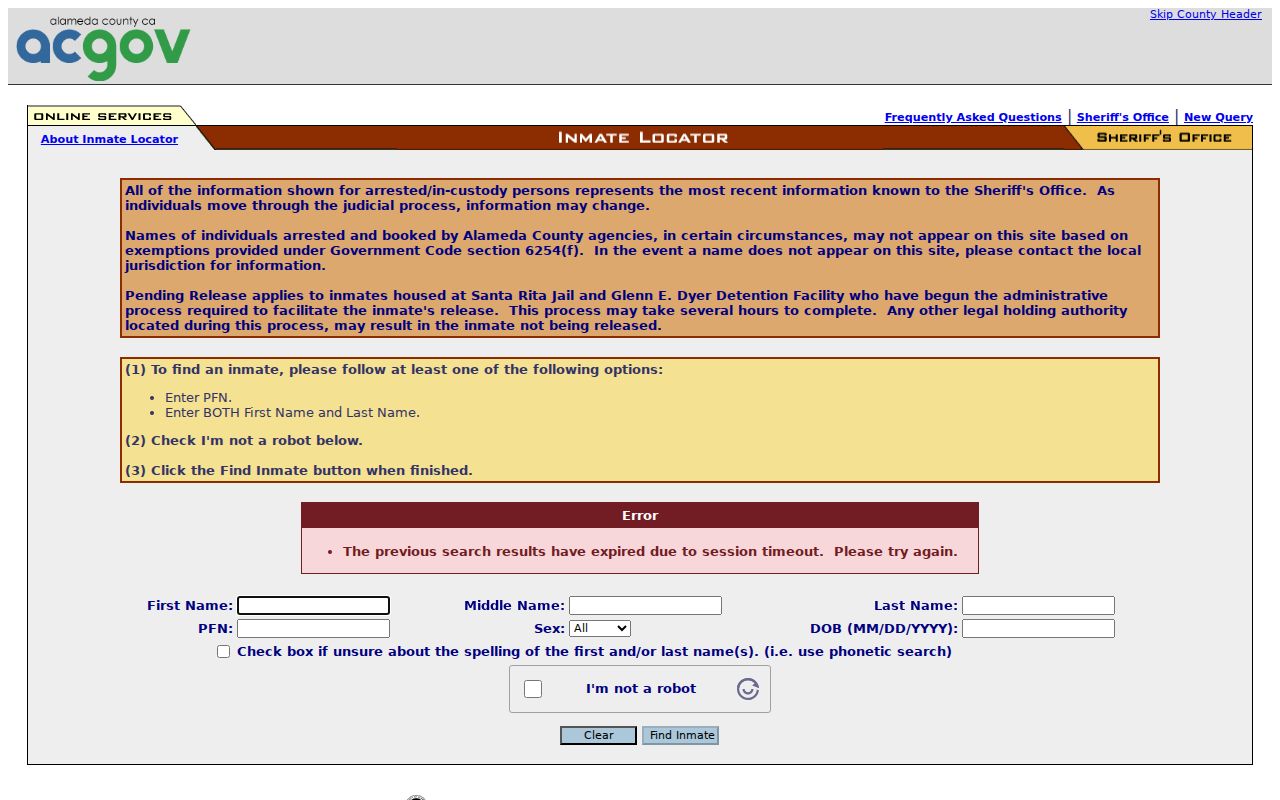
A narrow official tool can be trustworthy for its stated purpose and still be the wrong source for a block search. The same rule applies to parcel, voter, court, and civic records.
| Category | Strength | Limit |
|---|---|---|
| Parcel and assessment records | Official APN, situs, and selected owner or tax relationship | Ownership is not a full household |
| Voter and court records | Defined status, party role, or authorized registration data | Self lookup, purpose restriction, sealed content, or fees |
| Directories and census | Historical occupants and enumeration context | Older coverage; not a current block roll |
| Commercial compilation category | Convenience across mixed data sources | Stale, merged, inferred, and not a custodian record |
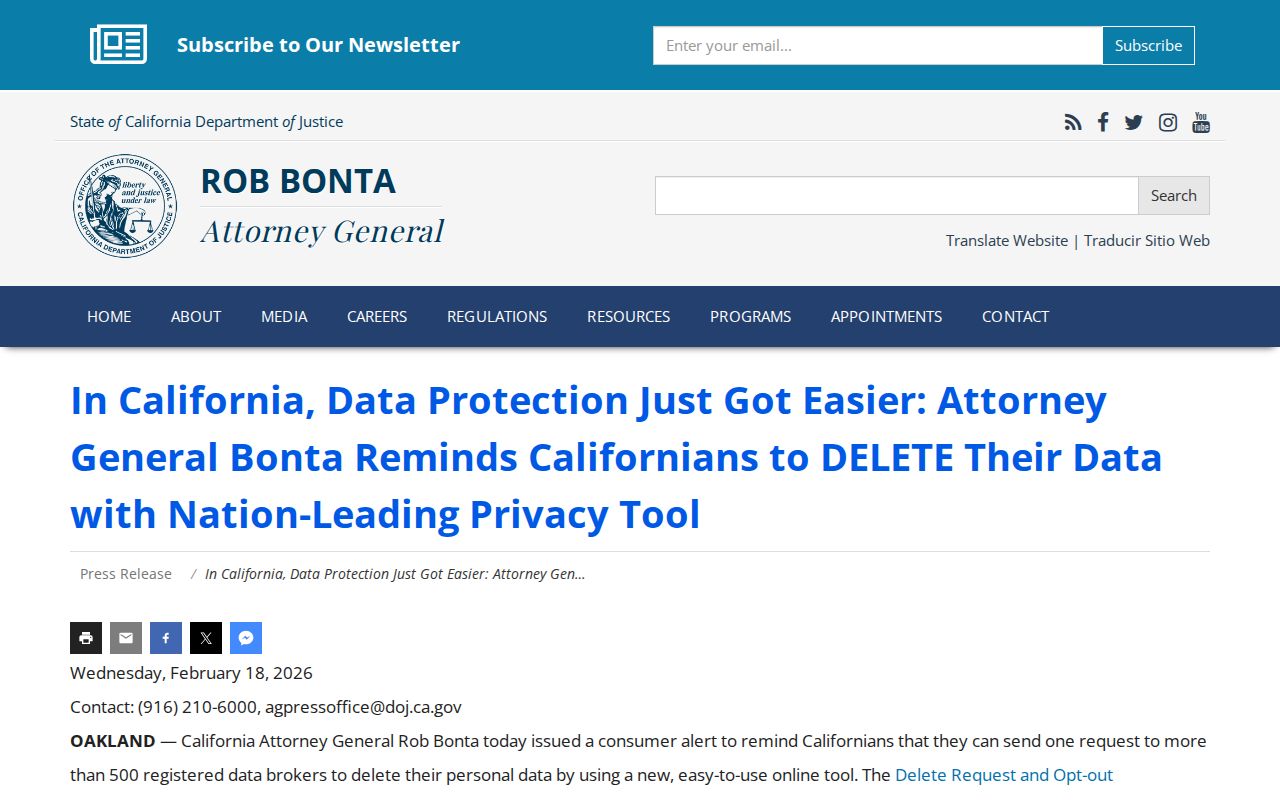
California privacy rights also affect what a person can remove from commercial systems. The Attorney General's 2026 announcement says DROP can send one encrypted deletion request to more than 500 registered data brokers, with processing duties beginning August 1, 2026.
The official California DROP announcement explains the one-stop request path.
Safe at Home adds substitute-address and confidential-voter protections for eligible participants. The Secretary of State’s Safe at Home guidance describes the program’s effects on voting, deeds, and government records. It cannot retroactively erase every old public reference. Utility data, delivery data, protected residents, and private household relationships stay outside a legitimate block lookup.
Lawful use. Use Oakland neighbors research for block orientation, civic contact, family reconnection, or personal safety awareness. Public availability never permits stalking, threats, impersonation, harassment, or evasion of a protective order; California Penal Code section 646.9 and voter-file rules still apply.