
Oakland Directory Collections by Era
The Oakland History Center lists Oakland's printed directory volumes from 1869 through 1943, while an older library post describes a narrower starting point. The collection page is the better guide, but individual years still need to be checked. An Oakland city directory search can begin with digitized Husted's Oakland, Alameda and Berkeley Directory, R. L. Polk & Co. volumes, or Bishop's Oakland directories and business directories. Internet Archive scans reach roughly 1869-1928; physical Oakland History Center holdings extend later.
The main directory shelf is alphabetical by surname and may include residents, businesses, classified sections, civic material, institutions, and a description of streets for that year. Reverse directories answer a different question because they sort by address or telephone number. Together, the two formats let a researcher move from a person to a place or from an old place to a listed occupant.
| Collection | Years | Where Held | Access |
|---|---|---|---|
| Printed Oakland directories, including Husted, Polk, and Bishop series | 1869-1943, with listed gaps | Oakland History Center; many scans on Internet Archive | In person at OHC or free online scans where digitized |
| Oakland reverse directories | 1936, 1953, 1961, 1964-1974, 1995; online links for 1938, 1940, 1944 | OHC and Main Library Magazine & Newspaper Room; selected digital links | Address or phone lookup; later volumes in person |
| Oakland birth and death certificates | 1870-1904 | Oakland History Center | In-person research or limited librarian lookup and copy service |
| Alameda County voter registers | 1867-1944 | Oakland History Center | In person; historical residence and registration context |
| Obituary files and Oakland newspaper indexes | Obituary index 1951-1993; Oakland Tribune index 1978 onward | Oakland History Center | Name lookup, citation work, and limited remote reference |
The printed run has meaningful holes. The library lists no printed directory in 1919, 1920, 1929, 1931, 1932, 1936, 1942, 1944-1966, or 1968. A missing year is not proof that a household left Oakland. Check a nearby volume, a reverse directory, a voter register, a census schedule, or a newspaper index before drawing that conclusion.
The Oakland History Center directory listing identifies the local city and reverse-directory holdings that make the year gaps easier to navigate.
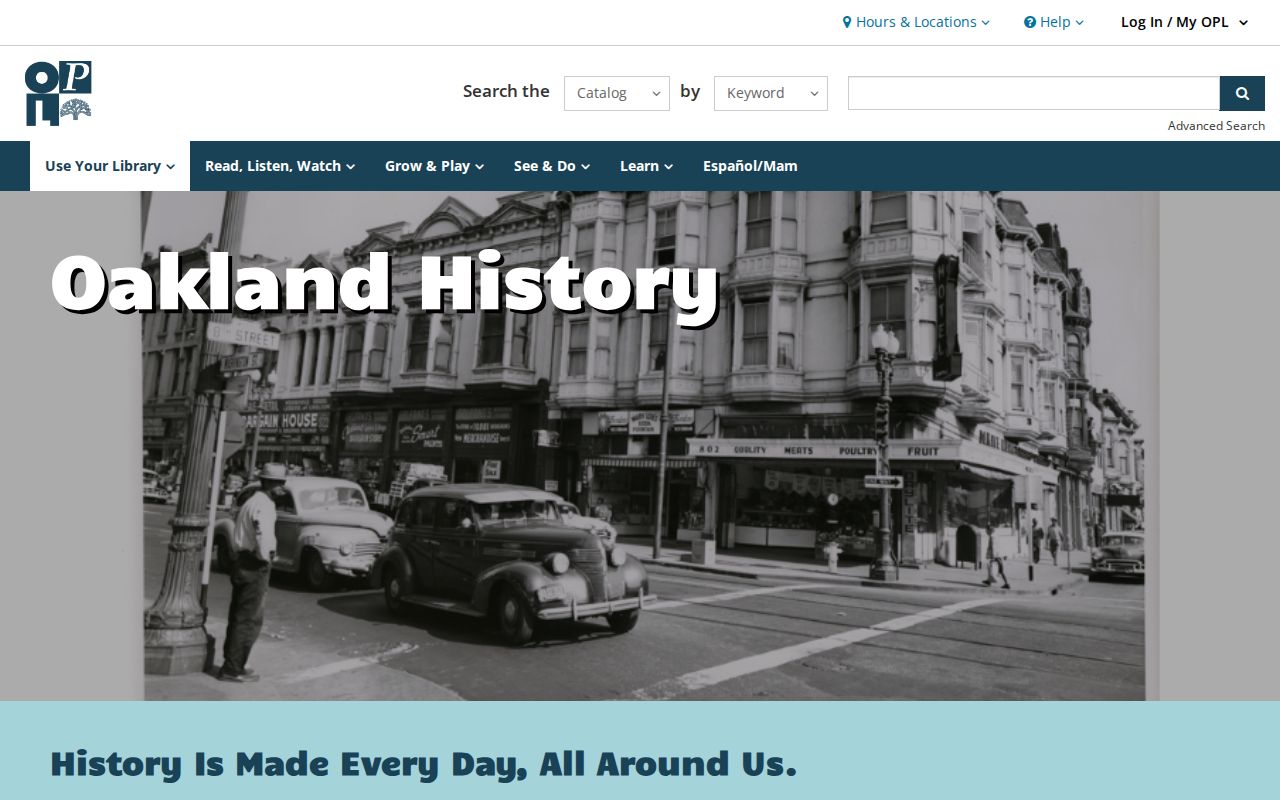
The collection view points to a mixed shelf rather than one unbroken book series, so a careful search records both the year checked and the format used.
Husted, Polk, and Bishop Oakland Directories
Publisher names help identify what kind of volume is open, but they do not replace a page-by-page check. Husted's Oakland, Alameda and Berkeley Directory appears among the digitized material. R. L. Polk & Co. directories form another recognizable series, and Bishop's Oakland directories and business directories add further coverage. The research record does not assign a single uninterrupted year span to each publisher, so the safest method is to use the library's year list and then inspect the title page of the chosen volume.
Front matter deserves as much care as the name pages. It can describe municipal institutions, businesses, streets, and the volume's abbreviation system. That context can explain why an address looks different in two years or why an entry appears under a spouse's name. It also helps separate an alphabetical entry from a business listing, where a name may identify a firm rather than a household.
The digitized Oakland directory collection on Internet Archive is useful for browsing the older run from home. Scans are strongest when the search starts with a known surname, street, or year and then checks the page image against the printed index.
A digital scan can shorten the first pass, while the Oakland History Center remains important for physical volumes, reverse directories, maps, and local indexes that are not all online.
Oakland History Center Access for Directory Research
The Oakland History Center is on the Main Library's second floor at 125 14th Street. Appointments are recommended. The research page lists 510-238-3134, while the location information also lists 510-238-3222. Email reference requests go to eanswers@oaklandlibrary.org. These details matter because the material does not circulate and many of the strongest address and neighborhood sources are in the room.
Remote help is limited but concrete. Researchers may request up to two lookups per month for Oakland birth and death certificates, death notices, obituaries, directories, and local indexes. Email and phone responses are stated as about three business days. Mailed requests take about one to three weeks. A remote lookup is best used to confirm a narrow citation or ask for a targeted entry, not to replace a broad visit through several volumes.
The Oakland house-history workflow shows how directories sit beside block books, Sanborn maps, an annexation map, and a street-name guide.
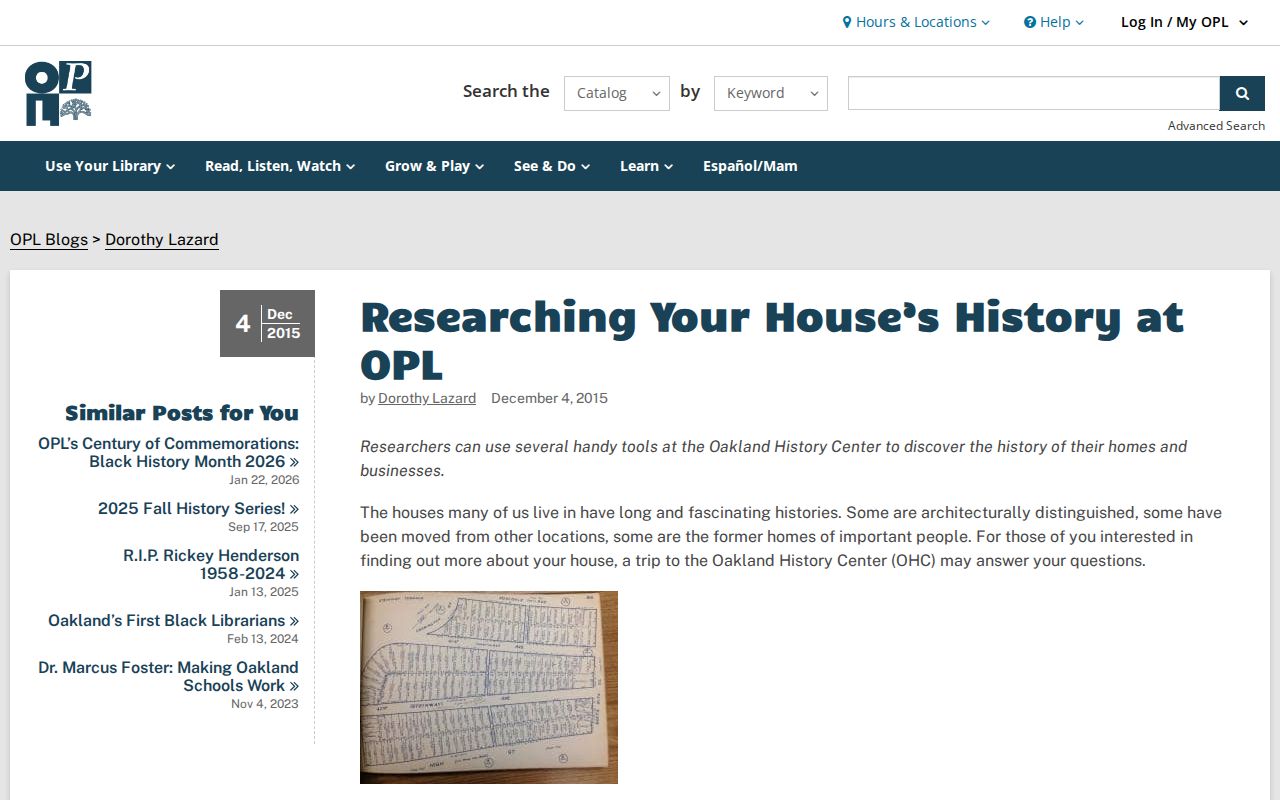
That combination is especially helpful when an old street name or number no longer matches present Oakland geography.
Library databases add another path. The Oakland family-history resources page points to genealogy databases, early certificates, censuses, voter registers, and librarian help. Ancestry Library is controlled by in-library or library-card access, while HeritageQuest is a library-card resource. Use the access terms shown by the library rather than assuming every collection is open from any device.
Reading an Oakland City Directory Entry
An Oakland directory entry is a compact set of clues, not a modern profile. Older volumes commonly place the surname first, followed by a given name or initial. A spouse may appear in parentheses. A widow notation can name the deceased spouse. The address follows a residence marker, while an occupation or business name may appear in the entry. Read the whole entry before treating any one field as an identity match.
| Name | Surname first, then given name or initial; people with the same surname cluster together. |
|---|---|
| Spouse clue | A spouse may appear in parentheses, and a widow notation may name the deceased spouse. |
| Occupation or business | The entry may state an occupation or identify a business name. |
| Residence marker | Common marks include “r” for resides, “h” for house, and “bds” for boards. |
| Address | House number and street follow the residence information; a business address may also appear. |
| Ownership mark | Some editions use symbols for homeowner status; check that volume's key before interpreting one. |
- Criss-cross directory
- An address- or telephone-ordered directory that lets a researcher move from a place to a listed occupant.
- Householder index
- An index centered on the household head or principal name, useful when the same address has several people.
- Abbreviation key
- The volume's explanation of short marks and symbols. Find it before reading entries because meanings can vary by edition.
Search both a person's own name and the household or spouse convention used by that edition. Married women may be indexed under a spouse convention in older volumes. A stable spouse and address can support an identity match when an occupation changes, but a name alone is not enough in a large city.
Oakland Reverse Directories by Address
Reverse directories are the key Oakland directory companion when the starting clue is a street number. The Oakland History Center lists reverse volumes for 1936, 1953, 1961, 1964 through 1974, and 1995. Digital links are listed for 1938, 1940, and 1944. Later volumes are held in the Main Library Magazine & Newspaper Room. Their address or telephone order makes it possible to browse a street and see nearby numbers rather than guess a surname first.
Use a reverse directory to identify the listed occupant or subscriber for a target year, then switch to the alphabetical volume to learn more about the name, spouse, occupation, or second address. The two formats are complementary. A reverse listing may reflect a phone subscriber or a listed occupant, while an alphabetical entry may reflect a household convention. Neither format proves who lives at the address today.
The selected reverse run is also an Oakland records-history clue. It shows how the access key changed from surname to address or phone during the telephone era, while the printed shelf itself stops at a different point. That discontinuity is why a past-resident search should preserve the exact volume and page reference rather than cite only “an old directory.”
Donogh Cards in Oakland Directory History
Oakland's Donogh real-estate cards are a rare bridge between a legal title trail and a neighborhood story. The Oakland History Center holds about 5,000 property cards from roughly the 1940s through the 1970s. A card may preserve a sale listing, property description, or photograph that does not appear in a directory entry. It can help place a building and its sale era beside names found in a reverse directory or newspaper.
A Donogh card is supporting evidence, not a deed. The recorded instrument remains the source for legal title, and a directory remains a source for a listed household or business. Used together, the three records can explain why a building changes hands in the deed chain while a household name changes in the directory. That is the kind of local detail a broad name search cannot supply.
Insider tip: Ask the Oakland History Center about a narrow property, street, or sale-era question when a card could bridge a gap. The library's remote limit is two lookups per month, so include the address, approximate year, and exact question in the request.
Trace a Household Through Oakland Directories
For family history, begin with the latest Oakland city directory year in which the person appears. Copy the exact name, spouse clue, occupation, address, and any mark that the abbreviation key explains. Then step backward through available editions. A stable address and spouse can strengthen an identity match; a changed occupation may still fit. A disappearance can mean a move, death, an unprinted year, an annexation, or an indexing variation.
- Find the earliest or latest useful Oakland directory entry and record the full citation, not just the name.
- Compare adjacent available years, noting address changes, spouse references, business names, and changes in the entry's form.
- Switch to a reverse directory when the question begins with an address, then browse nearby numbers for block context.
- Pair directory years with public federal census households and use Alameda voter registers between census years when the dates fit.
- Follow a death signal into the Oakland obituary index, newspapers, cemetery evidence, or probate records, while keeping each source's role separate.
The library's family-history resource page brings these companion sources together for Oakland research.
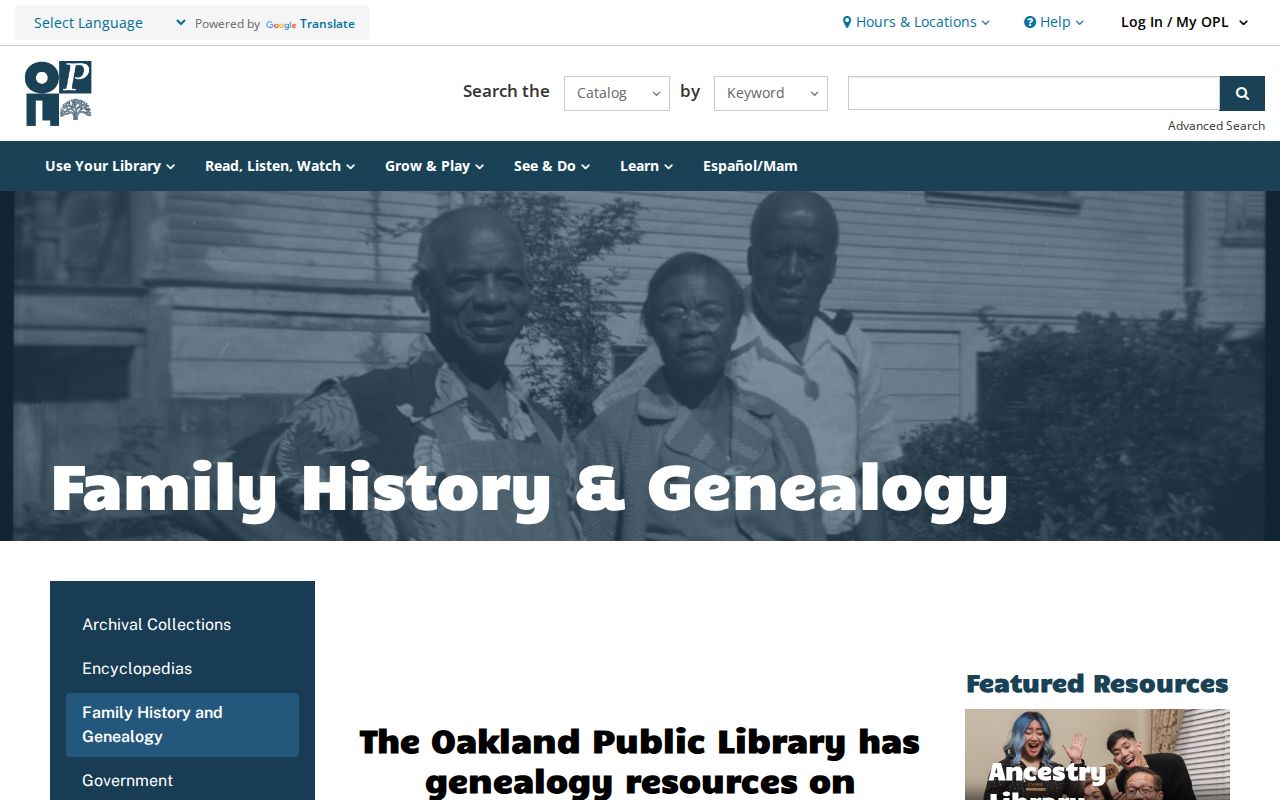
The image reinforces the practical rule: use the directory as one dated layer, then test the household clue against a record kept for a different purpose.
For Oakland classmate or reunion research, school publications and yearbooks may add a dated community link that a directory misses. The Oakland History Center, school or alumni collections, and digitized holdings are possible starting points; use consent-respecting channels when a person may still be living.
Oakland Directory and Census Years
Alameda County census access described by the library spans 1870 through 1960, but individual federal schedules are public through 1950 under the 72-year rule. The 1950 census is the latest open schedule identified in the research. Census enumeration order can show a household and nearby households at one dated moment, while an Oakland city directory supplies more frequent address and name checks between census dates.
The National Archives 1950 census search supplies the currently open federal schedule route.
That census layer can test whether a household clue from a directory belongs to the same address and time, without treating the two records as interchangeable.
The Census Bureau's historical data context explains the difference between public historical data and the restricted individual schedules that fall outside the open period.
The historical context is a reminder to mark the census year, directory year, and source type in separate columns when building a family timeline.
| 1867-1944 | Alameda County voter registers at the Oakland History Center can add historical residence and registration context. |
|---|---|
| 1869-1943 | Oakland directories provide named entries, addresses, household clues, and business information, with listed gaps. |
| 1870-1950 | Public federal census schedules provide dated household and enumeration context for the open period. |
| 1950-1993 | Later household questions may shift to reverse directories, obituary files, newspapers, and other local-history sources. |
Oakland record timeline: Alameda voter registers begin in 1867; Oakland directories begin in 1869; local birth and death certificates cover 1870-1904; printed city directories extend to 1943; selected reverse directories continue to 1995.
Oakland Newspapers Fill Directory Gaps
Newspapers can supply the event that explains a directory change. The Oakland History Center indexes nineteenth-century papers and the Oakland Tribune beginning in 1978. Its obituary files cover 1951-1993, and an African American newspaper index helps reach communities that mainstream directory and newspaper runs may underrepresent. A citation can lead to an obituary, wedding notice, club item, legal notice, or real-estate advertisement tied to a person or address.
Use newspaper material as secondary evidence. A notice may repeat a name or address without proving the legal relationship, and a reported address may be a business, relative's home, or event location. Compare it with the directory entry, census household, deed, or cemetery record that answers the specific question. The Oakland History Center is the natural starting point because its local indexes and clipping files sit beside the directory collection.
For a narrow reference question, include the person's name, possible street, event type, and a date range in the library request. When a directory clue becomes a birth, death, or marriage question, California’s county registrars and recorders guidance helps identify the proper local or state custodian. A precise question makes the two-lookup monthly limit more useful and reduces the chance of receiving a result from the wrong Oakland household.
Limits of an Oakland Directory
An Oakland directory is a historical index, not a complete list of everyone at an address. Printed years are missing, names can be abbreviated or misspelled, married women may be indexed under older spouse conventions, and the reverse format may reflect a telephone subscriber. A directory can miss children, unlisted household members, people who moved between printings, and residents whose names were not captured by that edition.
Ownership and occupancy also remain separate. The assessor and deed record can help establish a property chain, while a directory can show a listed name at a dated address. For current address-keyed work, the Oakland street directory follows the assessor, recorder, permit, and map layers. When one person needs cross-record verification, the Oakland resident lookup keeps the task centered on identity rather than a whole street.
Oakland's neighborhood history adds another caution. North Oakland touches Berkeley and Emeryville context, Piedmont is a separate city embedded in Oakland geography, and East Oakland's annexation history can change how an older address reads. A directory's front matter and street guide can clarify that setting before a name is matched across years.
Research rule. Preserve the volume, year, page, entry wording, and abbreviation key for every useful match. A citation makes an old directory clue testable when a later source disagrees.
That discipline keeps the Oakland directory useful for genealogy, reconnecting with historical communities, and local building history without turning a partial historical record into a claim about a living person.