
Finding People in the Oakland Residents Directory
Oakland keeps no single resident roll. Every roll exists for a purpose. The assessor tracks parcels and tax relationships. The elections office authenticates a voter, the courts index case parties, and the library preserves older households. So a name, a street, or a historical year each starts a different search. Ownership is not occupancy. A court appearance says nothing about character.
A practical Oakland residents directory search keeps those roles separate. Begin with the strongest fact you already hold, note its date, and move from one custodian to the next. Nonowners, children, unregistered adults, and people using a substitute address will not surface in every source. Some households never appear in a directory at all.
- Normalize the known name or street address, including an apartment or unit when it is known.
- Use the Alameda Assessor Parcel Viewer to connect a physical address with a parcel identifier and map location.
- Transfer a disclosed owner name to the Clerk-Recorder’s grantor and grantee index, then inspect the instrument and legal description.
- Use the Alameda and California voter tools only for an authorized self-lookup, and use Oakland History Center registers for historical residence clues.
- Match court, vital, directory, obituary, or city records by role and date, then ask the responsible office for an existing record when a web search ends.
What emerges is a chain of clues. It is not a master list of Oakland households. The chain gains strength from a second anchor, such as a parcel, a middle initial, a spouse, an occupation, or a dated event.
Oakland Resident Records Offices
Oakland is Alameda County's seat. Several custodians with countywide reach run counters in the city. The Clerk-Recorder handles recorded instruments and vital-record copies. The Assessor maintains parcel maps and assessment material. Elections offers self-service registration tools and purpose-limited voter-file access. The City Clerk and city departments keep municipal records, and the Superior Court holds case records for Oakland matters.
The county's Clerk-Recorder service hub is the best starting point when a question involves a deed, marriage record, birth or death record, fictitious business name, or notary filing. Its services remain distinct from a current resident list. Each office labels the role a record can support. That labeling keeps a taxpayer, applicant, voter, or court party from being mistaken for every person at an address. The Clerk-Recorder service page also shows the countywide counter functions behind Oakland's recorded and vital trails.
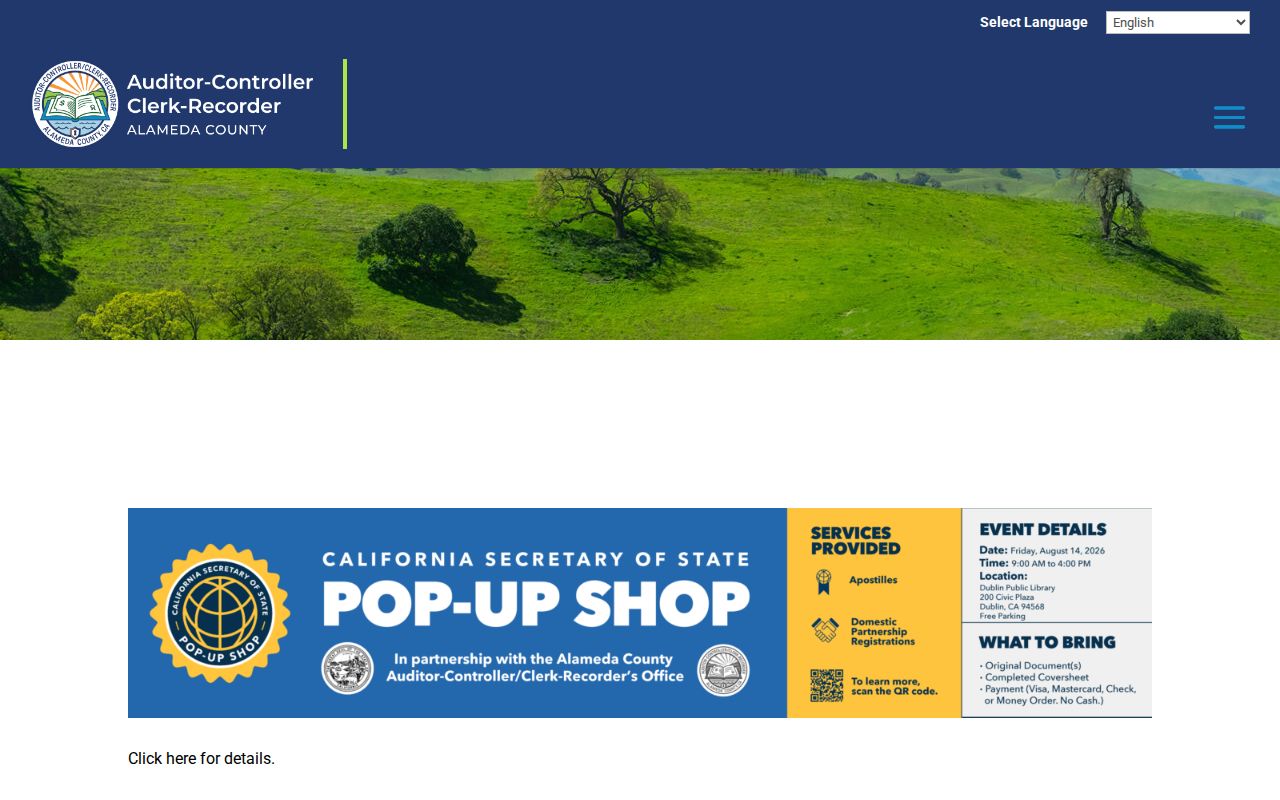
That service map sorts questions between the Recorder and other custodians. Check it before ordering a copy or filing a request.
Counter access matters when a web index stops. The recorder's older books offer one fallback. The Assessor's map desk offers another, and the library's local-history room offers a third. Bring a name, an address, and a narrow date range. Staff can then route the request without creating a new directory.
Alameda County Clerk-Recorder
1106 Madison Street
Oakland, California
510-272-6362 or 888-280-7708
Official Public Records
Alameda County Assessor
1221 Oak Street, Room 145
Oakland, California
510-272-3787
Assessor Parcel Viewer
Alameda County Elections
Registration and voter records
Oakland, California
510-272-6933
My Voter Profile
From an Oakland Address to a Parcel
An address search starts with the Alameda Assessor Parcel Viewer. It is a map interface keyed to a situs address or APN. APN stands for assessor parcel number. That identifier locates a mapped land unit in county records. Enter the address. Pick the normalized match, and record the parcel before reading anything into an owner or mailing field.
The map places an address among Oakland parcels. It is assessment cartography, not a legal survey. Aerial alignment can run approximate, recorded changes may lag several weeks, and an APN can shift after a subdivision, combination, or boundary adjustment.
| Address | Text or autocomplete route for the physical situs address; select a match. |
|---|---|
| APN | Text route for the county parcel identifier; hyphenation may be normalized. |
| Map pan and zoom | Browse nearby parcels and a street segment without a name search. |
| Parcel click or select | Open parcel attributes, map references, and the selected land unit. |
| Layers and basemap | Use parcel and reference geography; exact layer choices can change. |
| Print or map output | Assessment map reference only, not a boundary survey. |
Keep situs, mailing, and legal description in separate notes. A mailing address shows where notices go. It does not prove where anyone lives. The parcel bridges a street clue to a recorded land record.
Note: The Assessor viewer offers a strong starting clue, but recorded instruments and the legal description control title questions.
Current Oakland Resident Directory Sources
Current Oakland directory work compares partial sources. The Assessor can show a parcel and, where public, an owner or taxpayer relationship. The recorder shows parties to instruments. A voter tool authenticates only the voter using it. Courts show parties and roles in a case, while city permits show an address, project, and disclosed contacts. None lists everyone who lives in Oakland.
| Source | Who It Lists | Keeper | Access |
|---|---|---|---|
| Assessor Parcel Viewer | Parcel owner or taxpayer clues when disclosed | Alameda Assessor | Free map and counter access |
| Official Public Records | Grantors, grantees, borrowers, and other instrument parties | Alameda Clerk-Recorder | Free index from 1969; copies paid |
| Voter status tools | An authenticated voter’s registration and election information | Alameda County and California SOS | Self-lookup; files are purpose restricted |
| Court portals | Parties, case roles, filings, and register entries | Alameda Superior Court | Case-dependent account or registration |
| Oakland permit search | Applicants, owners, contractors, projects, and dates | Oakland Planning and Building | General records after 1987; roles vary |
Match the source to the question. A parcel suits an ownership lead. A deed supplies the legal record. A court docket shows a filed party role, and a city permit lays out a project chronology. When the question shifts from a whole Oakland street to its address chain, the Oakland street directory workflow keeps the parcel, deed, permit, and historical layers in order.
Why Oakland Deeds Start With Names
Deed research in Alameda County runs through names, not street addresses or parcel numbers. The recorded-document index lists parties instead. A grantor gives up an interest in the property; a grantee takes it on. That structure shapes every Oakland deed search from the start.
To walk a chain of title, take the current owner from the parcel trail. Search that name as a grantee. Compare the legal description that comes back against the parcel. Then hunt the earlier grantor as a later grantee. You step one generation backward. Repeat the pattern and the chain keeps unfolding. The Alameda Official Public Records portal displays the recorder's name-led route. Order choices appear for each search.
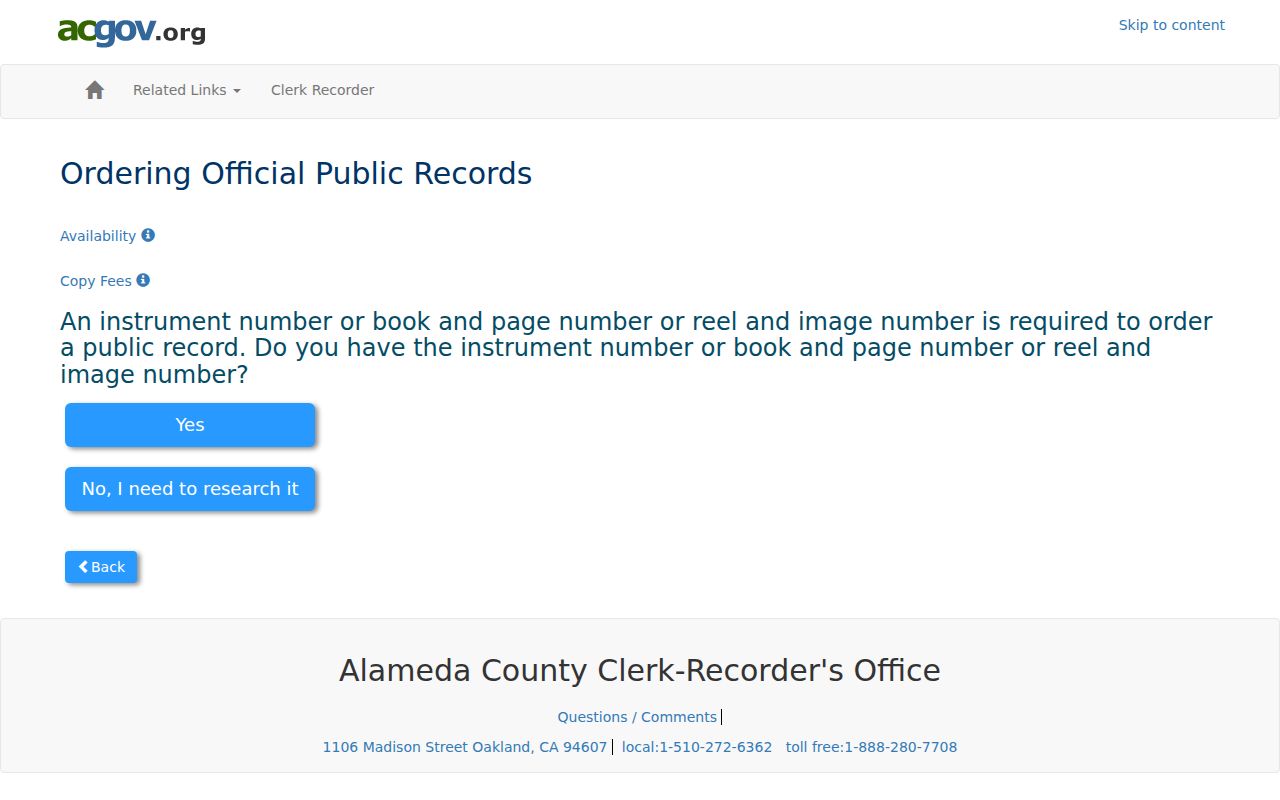
The electronic name index spans 1969 to the present. The official records reach back to 1853. Anything before 1969 means an in-person visit to 1106 Madison Street. Treat the index as a locator, not proof that someone lived somewhere. Plain copies run $3.50 per page. Certified copies cost $4.50 for the first page and $3.50 for each added one. Newly recorded documents take about two weeks before they can be ordered. Older or bulky requests may run longer.
Index and image fields worth checking include the party name as submitted, the recording date, the instrument number, book and page or reel and image. Also worth checking are the document type and the legal description inside the document. Deeds, deeds of trust, reconveyances, liens, notices, and maps each answer a different question. A same-name hit is only a start. It needs an address, parcel, spouse, middle initial, or dated role. Only then does it work as a solid Oakland residents directory clue.
Note: An index entry locates a document. The image plus legal description settle whether the name match belongs to that Oakland parcel.
Oakland Voter Records and Self Lookup
California built its voter tools for voters to check their own registration. They were not built for browsing an Oakland street. The Alameda My Voter Profile page and the state registration-status tool both ask for identity fields. Expect first name, last name, and date of birth. A driver license, state ID, or partial Social Security digits may follow, depending on the tool. County or ZIP details can help narrow the authenticated record.
The state status route may return registration status, registered name or party preference, districts and precinct, polling or vote-center details. It may also show ballot status and election materials. Ballot choices stay private. Home address, phone, email, prior registration, signature, driver or ID numbers, and Social Security numbers are all protected. Unique identifiers are protected too, except through authorized access.
A voter file is a different channel entirely. Elections Code section 2194 restricts file access to election, scholarly, journalistic, political, or governmental purposes. It carries certification and security duties. An approved file can hold residence and precinct fields. Personal curiosity cannot turn it into an open Oakland residents directory. Historical Alameda voter registers from 1867 through 1944 survive for in-person work at the Oakland History Center. The state voter-status page shows the self-service route that keeps this distinction intact.
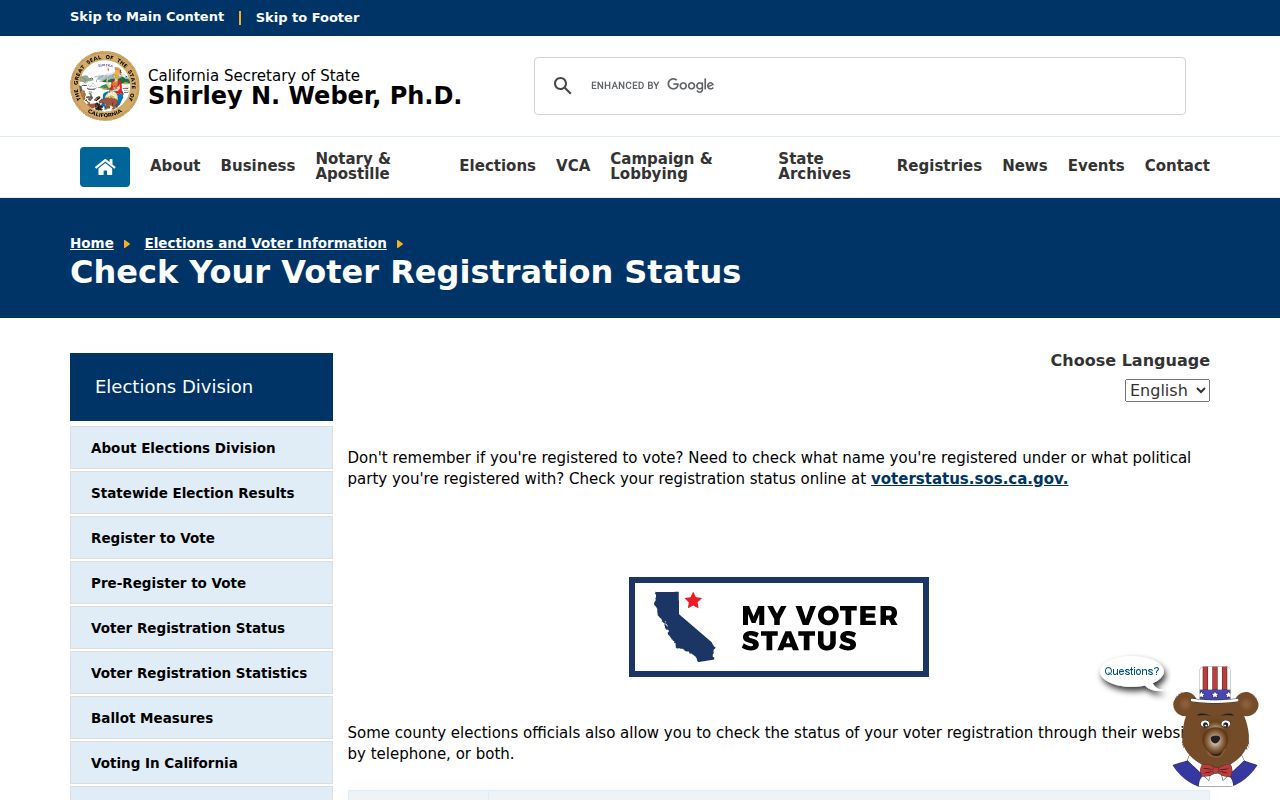
That boundary has a practical cost. A no-match in a voter lookup cannot prove that someone never lived at an Oakland address. The record may sit inactive, be confidential, fall outside the permitted search channel, or simply be missing from the voter roll.
Oakland Court Searches Use Two Portals
Alameda Superior Court splits its public access by case type. Civil, small claims, family, probate, mental-health, and adoption material flows through eCourt. Criminal hearing search and Smart Search run on a separate Odyssey route. That route requires registration first. The court's public portal directory makes the split plain for any Oakland name search. The portal page itself shows the separate case routes used for local court research.
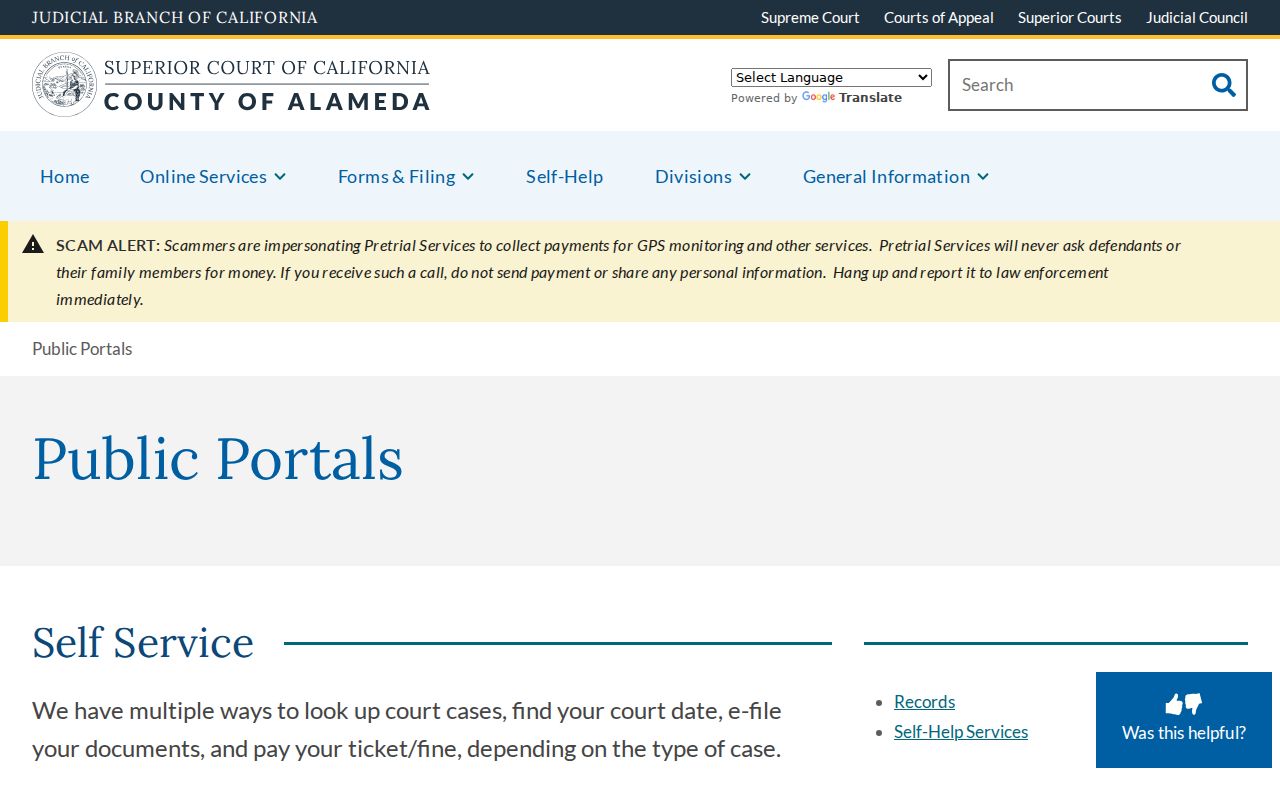
In eCourt, a name search can surface a case number. A case-number search is the free direct route to party and register-of-actions data. Accounts and credits apply to many name searches, documents, downloads, and printing. Criminal hearing search is more flexible than it looks. It accepts a case number, case type, CEN, PFN, hearing or filing date range, partial name, and department number.
Public terminals inside the courthouse help when remote access falls short. Archived files may need the clerk to pull them. Certified copies carry court fees, so confirm amounts with the court. The access channel changes from portal to portal. But the discipline of recording party role and case type never does.
- Case number, case title or type, and filing date identify the matter.
- Party names, roles, and entered attorneys show who appears in what capacity.
- Register-of-actions entries record filing or event dates and descriptions.
- Minutes, future hearings, departments, and document previews appear only where public.
A party is not automatically a defendant, and an allegation is not a disposition. Sealed, confidential, juvenile, protected family, and adoption information may simply be absent from the results. Court evidence earns real weight only when a party role, filing address, middle initial, attorney, and date line up with a separate Oakland record.
Oakland Vital Records, Indexes, Copies
Vital records in Oakland sit in layers, and knowing the custodian saves time. Alameda County Public Health acts as local registrar. It covers the current year and the one before it. The Alameda County Recorder keeps county birth and death records for all years. It also holds public marriage records when the license issued inside the county. Statewide events from July 1905 forward rest with the California Department of Public Health. The CDPH vital-records route publishes the forms and copy rules.
California opens nothing on a simple age trigger. An authorized certified birth or death copy demands a permitted relationship or role. Mail one in, and a notarized sworn statement rides along. Informational copies are different. Anyone can generally request one, though it is stamped not valid to establish identity. Public marriage copies stay available. Confidential marriage copies stay closed under Family Code section 509. Adoption files and original birth records remain sealed. A statute or court order must open them.
The 2026 state fees run $31 for a birth copy. A death copy costs $26, and a public marriage copy costs $19. A dissolution certificate runs $18. That dissolution certificate is an index product, not the Superior Court decree with its full terms. County fees and pickup rules shift, so confirm them with the live county office. An Oakland residents directory search should read a vital index as an event clue. The proper custodian hands over the record itself.
Oakland History Center Directory Shelf
Family history often reaches past living memory. The Oakland History Center stands in for a current residents roll better than anything else local. Its shelf runs deep. Holdings include Oakland city directories from 1869 through 1943. Selected reverse directories span 1936 to 1995, and Alameda County voter registers run from 1867 to 1944. Birth and death certificates for Oakland are dated 1870 to 1904. These sit alongside obituary files, newspapers, block books, Sanborn maps, school publications, manuscripts, and community archives. The Oakland History Center collection page describes the local-history scope and its reference service.
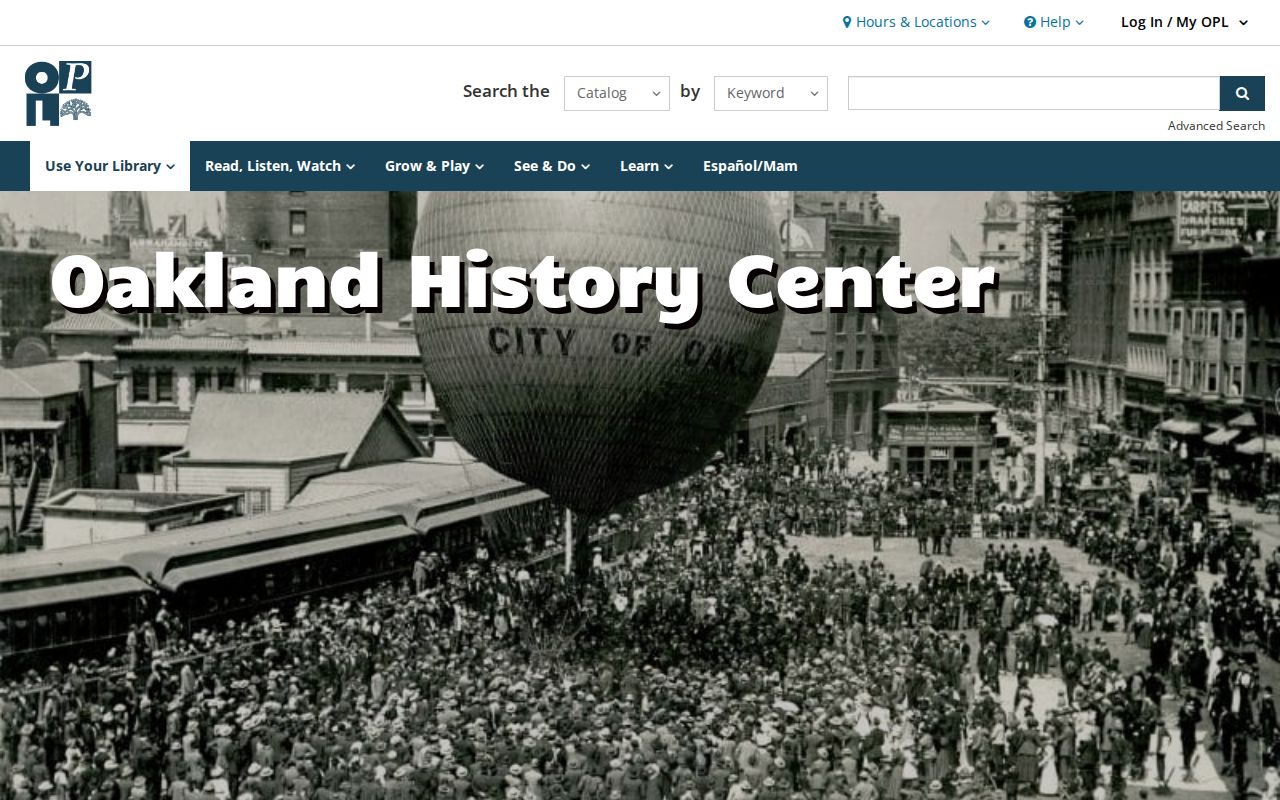
Nothing circulates. Appointments are recommended. The center will run up to two lookups per month. These cover Oakland birth or death certificates, death notices, obituaries, directories, and local indexes. Its pages list 510-238-3134 and 510-238-3222, with eanswers@oaklandlibrary.org for questions. Email and phone replies are stated as within three business days. Mailed requests take roughly one to three weeks.
Some directory years simply never rolled off the press: 1919, 1920, 1929, 1931, 1932, 1936, and 1942. Others fall in the long run of 1944 through 1966, plus 1968. Reverse directories help most when an alphabetical name search stalls. They organize by address or phone. A street or block can surface even without a surname. The historical Oakland city directory page lays out the collection-by-collection reading method. It also explains the caution about publication gaps.
Note: A library gap year is a publication gap, never proof that no Oakland household existed or that a person left town.
A Human Check for an Oakland Resident
Oakland is big enough that names repeat. The 2020 decennial census counted 440,646 people. A name-only hit can weld together households that share nothing. A human-use workflow works better. Build a dated timeline first, then ask what each record actually proves. A deed names a party to an instrument, and a license shows a professional credential. A probate filing can identify an heir or petitioner. An obituary links relatives without claiming a current address.
- Roll
- A purpose-specific list, such as an assessment or voter roll, rather than a complete list of every Oakland household.
- Index
- A locator that points to a record, party, date, or instrument; it is not the full image or certified copy.
- Parcel
- A mapped land unit identified by an APN and used for assessment and property administration.
- Criss-cross directory
- An address- or phone-ordered directory that supports a move from a street clue to a listed occupant.
The California Department of Consumer Affairs license search helps whenever a public professional role needs checking.
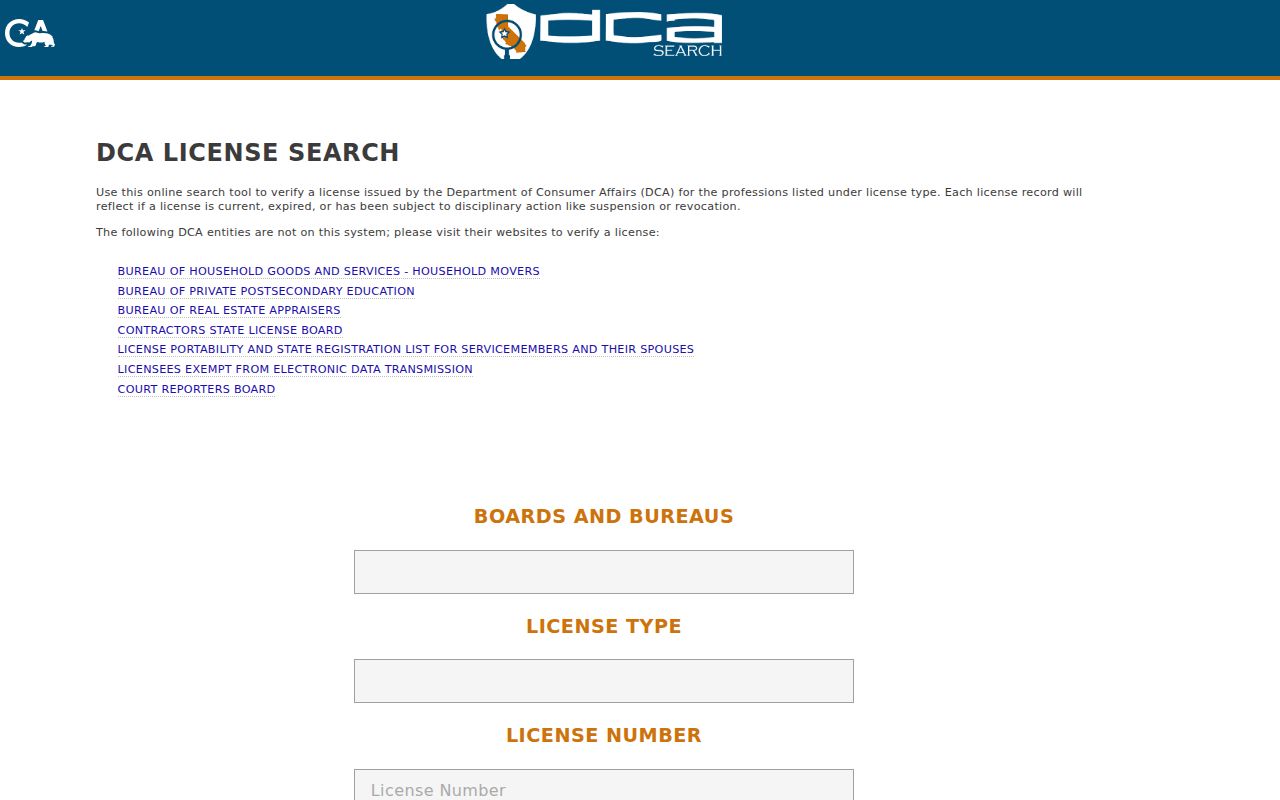
License results vary in what they carry. A listing can show a license number or type, a name, an address of record where public, issue and expiration dates, status, and public discipline. Treat that address carefully. It describes the license relationship, not necessarily a home. For a business-linked name, the California Secretary of State bizfile search can surface an entity number, status, type, jurisdiction, principal or mailing address, agent for service, disclosed managers or officers, and filing history.
An agent address is a service address. That is all. Pair a business filing with a parcel, deed, city permit, or Fictitious Business Name record only when the roles genuinely align. For family history, a probate petition, obituary, directory entry, and deed can reconnect an heir trail across decades. The trick is refusing to turn an uncertain name into a claim. That claim should never be about a living household.
| Approach | Useful clue | What to verify |
|---|---|---|
| Official custodian | Parcel, deed, court, voter, vital, or license record | Role, date, coverage, and the office’s access rule |
| Historical collection | Directory, voter register, obituary, map, or school publication | Publication year, indexing convention, and whether the item is secondary evidence |
| Commercial compilation | Aggregated public, marketing, and inferred relationship clues | Stale addresses, merged same-name people, and the original custodian |
Where Oakland Public Searching Stops
Some gaps are permanent parts of the map. Parcel data can miss nonowners and other household members. Utility customer lists and DMV files are not open resident directories. Sealed court files, juvenile matters, adoption records, protected voter fields, confidential marriages, and Safe at Home records stay closed by design. A city staff directory names a public role, not a home address.
An agency that plausibly holds a disclosable record can be asked directly. A targeted request may lean on the California Public Records Act, Government Code division 10, sections 7920.000-7931.000, or on Oakland's Sunshine Ordinance in Municipal Code chapter 2.20. Request an existing export, log, roster, index, or record. Name the department, the address or person, and the date range. Agencies need not build a new directory or answer a vague question.
The Oakland NextRequest portal lets anyone browse request material and file a focused city request.
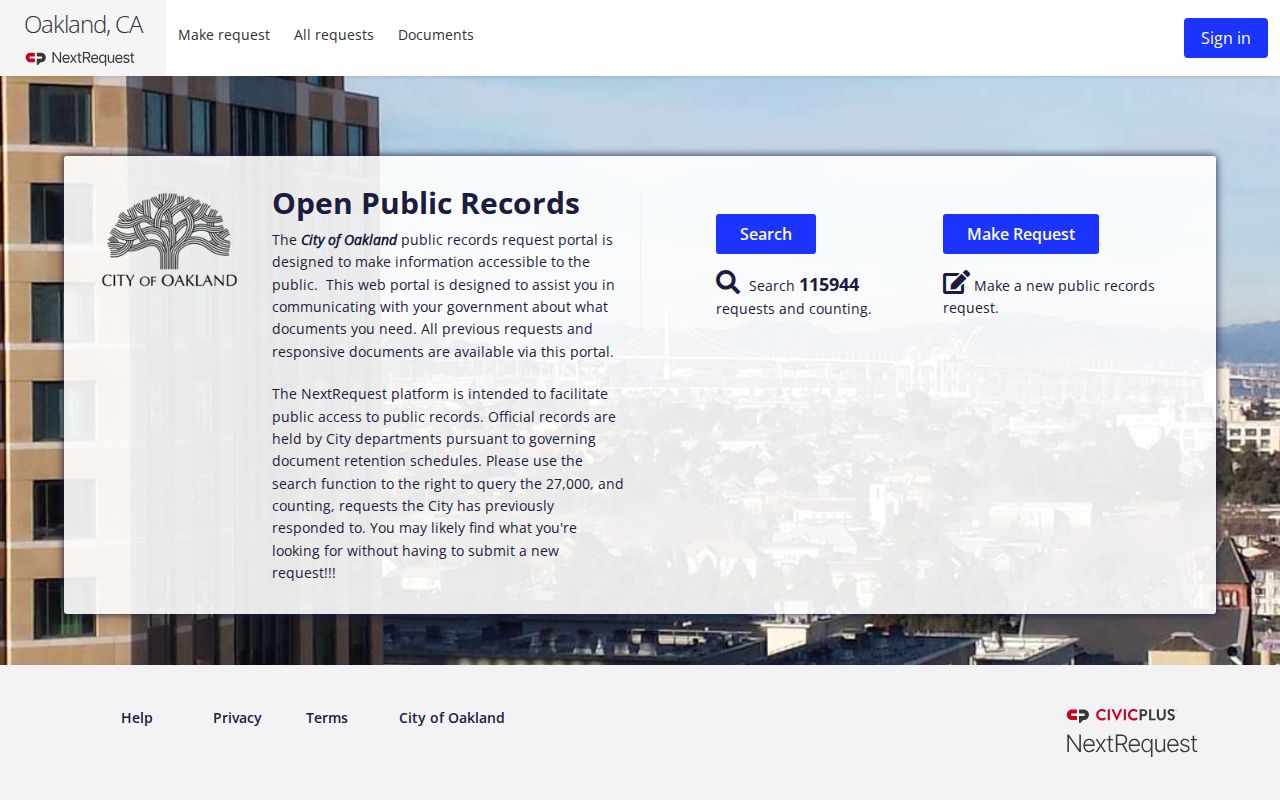
California agencies usually decide a request within ten calendar days. An unusual case can bring a written extension of up to fourteen more. Either way, that clock only governs the determination. It does not cover the delivery of copies. Recorder copies, court files, and vital certificates still move through their own purchase or court-access procedures. A CPRA shortcut does not speed them along.
Safe at Home and Oakland Address Privacy
Privacy rules often explain why an Oakland address is missing. The record itself may still show up. Safe at Home, created under Government Code sections 6205 through 6211, gives eligible participants a substitute mailing address. It also provides confidential voter registration. State and local agencies, along with the courts, accept that designated address. Qualified participants can also use a statutory procedure to swap it into specified real-property instruments. Even so, the program does not scrub every old public reference from view.
Voter confidentiality rules guard home and contact data except through authorized channels. The California Consumer Privacy Act, amended by the CPRA, gives covered consumers the right to know and delete. They can also correct, and opt out of sale or sharing. The state's DROP system, arriving in 2026, can carry one encrypted deletion request. It reaches more than 500 registered data brokers. Their processing duties begin August 1, 2026. Deleting a commercial copy still leaves a deed or assessment record intact.
For more detail, Safe at Home information describes the substitute-address system. California Attorney General CCPA guidance explains consumer privacy rights.
Lawful personal use. Oakland records support lawful research, family history, civic understanding, and address questions. Do not use names, addresses, or record clues to stalk, harass, intimidate, impersonate, or evade a protective order.
Historical Oakland Resident Directories
Oakland's historical resident directories shine when the question involves a past household rather than a current universal roll. Husted's Oakland, Alameda and Berkeley Directory appears across the local and digitized record. R. L. Polk & Co. volumes appear there too. So do Bishop's Oakland directories. An alphabetical entry can pair a name with an address. It may also show a spouse notation, an occupation, or a residence marker. Reverse and criss-cross volumes flip the question, starting instead from an address or phone number.
Always use the year printed on the volume. Read its abbreviation key, and record the street exactly as shown. A break in the trail can come from a moved household or a nonpublication year. A changed street name or an indexing convention can do the same. Older entries support family history. Pair them with voter registers, census schedules, obituaries, block books, or deeds. They cannot, however, establish a present Oakland residence on their own.
Oakland Records by Era
Oakland's record trail is best read as a sequence of handoffs. The county, city, state, court, and library each started collecting at different moments. No single custodian holds everything. That pattern shapes any Oakland residents directory search. The search has to switch offices as the question moves backward in time.
- 1853: Alameda County was created, and the Clerk-Recorder’s official-record coverage begins with the county.
- 1867: Alameda County voter registers begin in the Oakland History Center’s historical collection.
- 1869: Oakland city directory coverage begins, with later nonpublication gaps that must be checked year by year.
- 1870-1904: Oakland’s early birth and death certificates bridge the period before statewide California registration in July 1905.
- 1877-1925: Oakland assessor block books preserve owner, value, and parcel-change evidence in the History Center Map Room.
- 1969: The Alameda electronic official-record name index begins, while earlier deed research remains in person.
- 1987 onward and 2021: Oakland’s permit portal advertises general records after 1987, and Alameda Superior Court’s new civil case system launched on October 12, 2021.
Note: An Oakland records timeline offers dated clues only, not a single proof of where someone lives today.